

 |
A study published in Science reveals that a healthy gut microbiota can enhance the efficacy of immunotherapy used to treat cancer, while antibiotics may impair its effect by reducing intestinal microbiota diversity.
PORTO, Portugal, Feb. 25, 2026 /PRNewswire/ — An international consortium of 48 researchers from institutions in France, Sweden, and the United States has won the 2025 edition of the Bial Award in Biomedicine, a €350,000 prize promoted by the Bial Foundation to recognise a published work of exceptional quality and scientific relevance in the field of biomedicine.



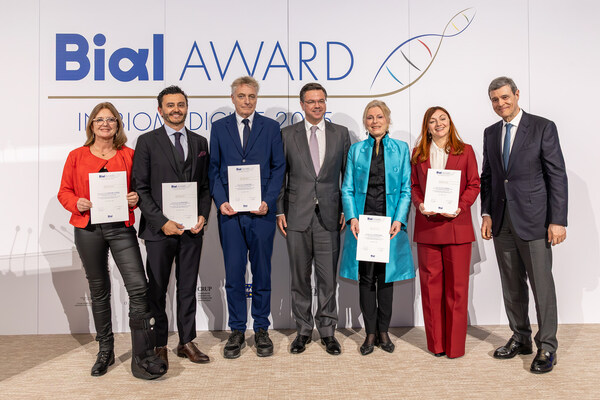
Lead researchers of the winning team of the Bial Award in Biomedicine 2025 promoted by the Bial Foundation.
The winning study, Gut microbiome influences efficacy of PD‑1–based immunotherapy against epithelial tumors, is led by research duo Laurence Zitvogel (Gustave Roussy and Paris-Saclay University) and Guido Kroemer (Gustave Roussy and Paris Cité University), internationally renowned French academics.
The awarded research documents one of the most significant recent advances in the treatment of several types of cancer, as it establishes that the gut microbiome – the collection of bacteria residing in the human intestine – plays a decisive role in the effectiveness of immunotherapy.
Immunotherapy has revolutionised oncology by enabling the immune system to recognise tumour cells once again and attack them, saving many patients who previously had no effective therapeutic alternatives. However, over half of patients develop resistance to these therapies, leading to disease recurrence for reasons that are until now poorly understood. The distinguished study demonstrates that the gut microbiome plays a central role in this resistance and that its modulation can significantly improve treatment response and patient survival.
The authors show that the use of antibiotics can negatively impact the effectiveness of immunotherapy by reducing gut microbiota diversity. Analysis of cancer patients revealed that greater bacterial diversity is associated with better clinical outcomes. The study also identified specific gut bacterial species consistently associated with more favourable treatment responses.
The study was published in Science in 2018 and has already more than 5,800 scientific citations.
The 2025 edition of the Award received 58 nominations from 18 countries, covering areas such as cancer, infectious diseases, and neurodegenerative disorders. Previous editions distinguished research, later receiving prestigious international scientific prizes. Notably, two of the scientists who received the Bial Award in 2021, Katalin Karikó and Drew Weissman, were awarded the 2023 Nobel Prize in Physiology or Medicine for their discoveries that enabled the development of effective mRNA-based vaccines to prevent COVID ‑ 19.

