

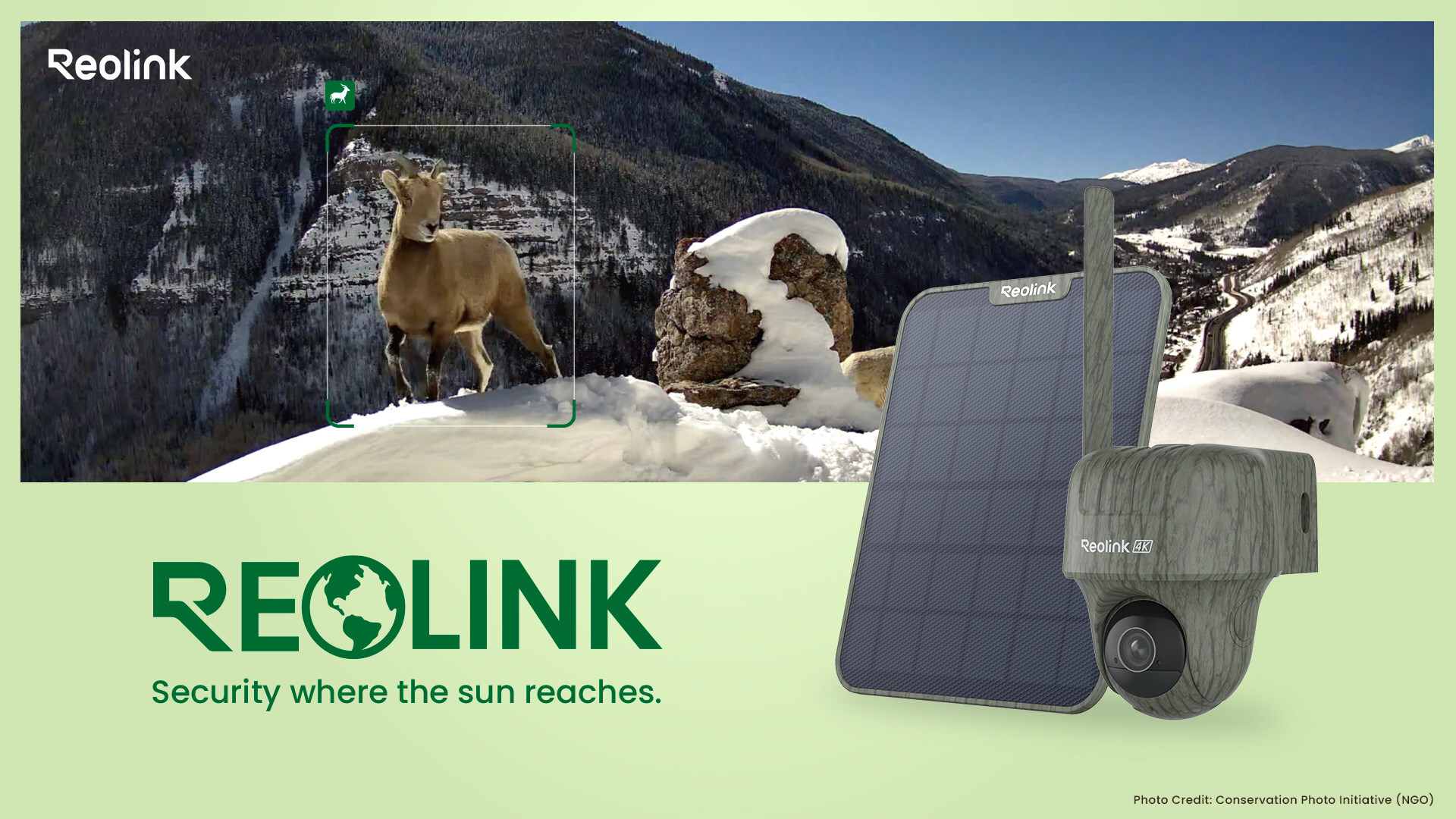
LOS ANGELES, April 22, 2026 /PRNewswire/ — Reolink, a global leader in intelligent visual technology for homes and businesses, offers solar security cameras that do more than protect a home – they can help protect the planet as well. This Earth Day, Reolink showcases how its latest solar-powered solutions, designed with the new SolarEase™ technology, are helping households reduce their reliance on grid electricity while enabling quieter, non-intrusive monitoring of the natural world around them.

Reolink Solar Security Cameras Help Power a Greener Planet this Earth Day


Scaling Solar Adoption in Everyday Security
Solar energy remains one of the most accessible and environmentally friendly power sources. Reolink continues to expand its solar-powered product lineup by integrating solar panels with wireless security cameras, making clean energy more practical for everyday use.
In 2025 alone, over 616,000 Reolink solar panels were deployed in households worldwide. Collectively, these systems generated more than 67,452 kWh of electricity to power security cameras, enough to power a household for nearly 5 years, helping avoid approximately 67.5 tons of CO₂ emissions[1].
SolarEase™ Technology: Enhancing Sustainable Power for Solar Cameras
To address the challenges of inconsistent sunlight in outdoor environments, Reolink introduces its latest SolarEase™ technology, designed to deliver more reliable and efficient solar charging.
SolarEase™ enables Reolink cameras to maintain stable performance even in low-light and partially shaded conditions. Just one hour of daylight can support nighttime illumination needs, while a full charge can last up to three months under typical usage — making it a dependable solution in environments with limited or inconsistent sunlight.
With a charging efficiency increased to 26%, SolarEase™ represents a meaningful step forward in optimizing solar energy conversion. This advancement is brought to life in Reolink’s latest Solar Floodlight Cam, now available across global markets, delivering powerful illumination and reliable security powered by clean energy.
Supporting a Greener, Wildlife-Friendly Planet
Reolink’s commitment to clean energy extends beyond households to broader environmental and ecological impact. Its solar-powered cameras operate wire-free, quietly, and independently, enabling continuous, non-intrusive monitoring of natural habitats without the need for complex infrastructure or frequent human intervention.
To date, Reolink has supported over 55 NGOs worldwide, contributing to a shared vision of a more sustainable planet where people and wildlife can coexist.
“At Reolink, we believe the technology protecting your home should also protect the world beyond it,” said Annie Potter, Head of Marketing at Reolink (North America). “Our partnership with organizations like the National Wildlife Federation reflects that commitment, not to just people, but to the ecosystems and communities we all share.”
Among these efforts, Reolink partnered with the National Wildlife Federation in the United States in 2026 to support public awareness initiatives around everyday wildlife conservation. In Germany, Reolink is working with Deutscher Tierschutzbund to enhance security solutions that help protect pets and support animal welfare efforts.
A Continued Commitment to Sustainability
Through ongoing innovation in solar-powered technologies, Reolink aims to make sustainable living more accessible while reducing environmental impact. Looking ahead, the company continues to explore how smart security solutions can contribute to a greener future for both people and the natural world.
Visit Reolink.com to learn more about Reolink’s Earth Day initiative and how its solar security cameras support a more sustainable future.
About Reolink
Reolink offers smart security solutions for homes and businesses, aiming for a seamless security experience with its wide range of products. Serving millions globally, it provides video surveillance and protection, standing out for its commitment to security technology innovation. For more information about Reolink, please visit www.Reolink.com.
|
[1] Note: This calculation is based on approximately 616,000 solar panels deployed in 2025, with an estimated annual energy output of 67,452 kWh, and corresponding CO₂ emissions reductions calculated using standard grid emission factors. |

