


All-atom biomolecular foundation model uses co-folding as the entry point to a scalable drug discovery engine; the release marks a concrete step toward advancing open scientific AI for future biomedical research that benefit patients.
LAGUNA HILLS, Calif. and SHANGHAI, July 7, 2026 /PRNewswire/ — Aureka, an AI TechBio company building infrastructure for AI-driven biologics discovery, today announced the release of Open Drug Discovery Engine (OpenDDE), an open-source, all-atom biomolecular foundation model designed to serve as the structural reasoning core of next-generation drug discovery systems.


OpenDDE uses biomolecular co-folding as the entry point to model interactions across proteins, nucleic acids, small-molecule ligands, and other biomolecular components. Rather than treating structure prediction as an isolated endpoint, OpenDDE is designed as a shared structural reasoning layer for sequence–structure–function modeling, enabling complex structure prediction today while laying the foundation for de novo design, affinity estimation, structure-conditioned optimization, and closed-loop discovery workflows. Across in silico benchmarks, OpenDDE shows competitive co-folding performance and narrows the gap with reported IsoDDE-level results, while offering an open and reproducible framework for the broader drug discovery community.
|
“OpenDDE begins with open, all-atom co-folding and structural reasoning. On selected in silico benchmarks, it shows competitive performance that narrows the gap with reported IsoDDE-level results. We view this release as an early foundation toward a broader drug discovery engine: a system that can progressively connect structure prediction, molecular design, affinity estimation, and experimental feedback to support more informed exploration of disease- and target-relevant molecular space.“ —Will Hua from Aureka AI Research |

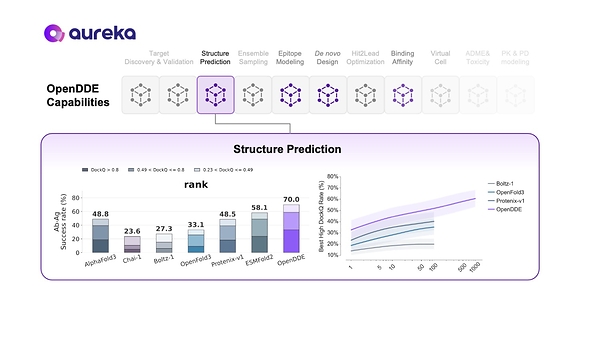
Image 1. OpenDDE capabilities and structure prediction overview. Source: Aureka AI Research.
Three Technical Contributions Behind OpenDDE
- Atomic latent reasoning over biomolecular tokens. OpenDDE introduces latent reasoning for biomolecular modeling by refining representations of local geometry, chemical context, and cross-molecular interfaces before all-atom structure generation.
- A folding-centered foundation for an extensible drug-discovery engine. OpenDDE currently focuses on complex structure prediction, but its unified architecture is designed to support de novo molecular design, affinity prediction, and other structure-conditioned modules.
- Scaling laws and data distillation. Aureka studies scaling directions along model-parameter, data, inference, and training axes, pointing to practical routes for continued improvement in biomolecular foundation models.

Image 2. OpenDDE architecture, structural-token reasoning, and atomic shape complementarity. Source: Aureka AI Research.
Open Benchmark Performance in Antibody-Antigen Co-Folding
In Aureka’s technical report, OpenDDE demonstrates strong antibody-antigen co-folding performance across three benchmarks. Under top-ranked selection, OpenDDE reaches 51.0% success on PXMeter-AB, 70.0% on FoldBench-AB, and 66.4% on the newly curated 2026ARK-AB benchmark. Under oracle selection, the corresponding success rates rise to 65.9%, 81.9%, and 80.1%, indicating strong latent sampling capacity and a clear opportunity for further gains through confidence calibration and candidate ranking.
The results are particularly relevant for therapeutic discovery because antibody-antigen interfaces are difficult, flexible, and chemically diverse. Aureka reports that OpenDDE improves not only low-threshold recovery but also medium- and high-quality DockQ regimes, suggesting stronger modeling of binding geometry rather than merely producing marginally acceptable complexes.

Image 3. Antibody-antigen structure prediction performance across PXMeter-AB, FoldBench-AB, and 2026ARK-AB. Source: Aureka AI Research.
Biomolecular Foundation Models Are Entering the Scaling Era
OpenDDE has approximately 655 million trainable parameters. Aureka reports that the model required approximately 414,000 GPU-hours for training, equivalent to roughly 54 years on a single computing unit. This scale reflects a broader shift in AI for Biology: the frontier is no longer only an algorithm problem, but an infrastructure problem requiring compute, data pipelines, engineering, evaluation, and long-running training windows.
Aureka’s analysis identifies clear scaling trends for biomolecular foundation models, suggesting that larger effective training corpora, larger models, more capable inference-time sampling, and post-training improvements can systematically translate into stronger biological reasoning and structure prediction. For Aureka, this is a signal that biomolecular AI is beginning to enter a scaling regime analogous to the one that transformed large language models.

Image 4. Scaling trends observed in biomolecular foundation models. Source: Aureka AI Research.
An Open Release for the Global Scientific Community
OpenDDE is released to make frontier biomolecular modeling more accessible to researchers, startups, academic laboratories, and multinational corporations. Aureka is releasing training code, inference pipelines, checkpoints, and benchmarks under the Apache-2.0 license, with the goal of enabling independent validation, community-driven extension, and global collaboration.
The release is available at:
- GitHub: https://github.com/aurekaresearch/OpenDDE
- Hugging Face: https://huggingface.co/aurekaresearch/OpenDDE
- Website: https://aurekaresearch.github.io/OpenDDE-Website/
Building TechBio Infrastructures
OpenDDE is an initial foundation for that future. Today, it serves structure prediction, antibody-antigen modeling, and drug discovery research. Over time, Aureka will extend the system toward de novo design, affinity estimation, conformational ensemble modeling, structure-conditioned optimization, experimental feedback, and broader scientific world modeling.
Aureka is also pairing this computational foundation with a high-throughput automated wet-lab platform to build a dry-wet closed–loop discovery system. By integrating autonomous antibody-design agents with high-throughput single-cell functional screening and automated yeast evolution, Aureka aims to create a high-throughput, high-content experimental data flywheel for functional antibody discovery. This platform allows AI agents to propose candidates, test them through automated experimental workflows, absorb functional and phenotypic feedback, and iteratively improve their design strategies.
Together, Aureka’s TechBio infrastructures are designed to support the next generation of antibody discovery across complex modalities such as epitope-specific antibodies, multispecific antibodies, internalizing antibodies, and pH-switch antibodies, with the long-term goal of developing differentiated First-in-Class and Best-in-Class therapeutic pipelines.
About Aureka
Aureka is an AI TechBio company developing infrastructure for AI-driven biology and therapeutic discovery. The company integrates large-scale compute, biomolecular foundation models, high-throughput wet-lab systems, and data flywheel capabilities to accelerate discovery in complex biological systems. Aureka’s mission is to improve human health by digitalizing and democratizing therapeutic discovery.
Forward-Looking Statements
This press release contains forward-looking statements regarding Aureka, OpenDDE, future research directions, product plans, and potential applications. These statements are based on current expectations and assumptions and are subject to risks and uncertainties, including technical, experimental, regulatory, commercial, and market factors. OpenDDE’s current release focuses primarily on biomolecular structure modeling and co-folding. Downstream capabilities such as molecular design, affinity prediction, conformational ensemble modeling, active learning, experimental feedback, and clinical translation require further research, validation, and development. Aureka does not guarantee the discovery, approval, or commercialization of any specific therapeutic candidate.

