


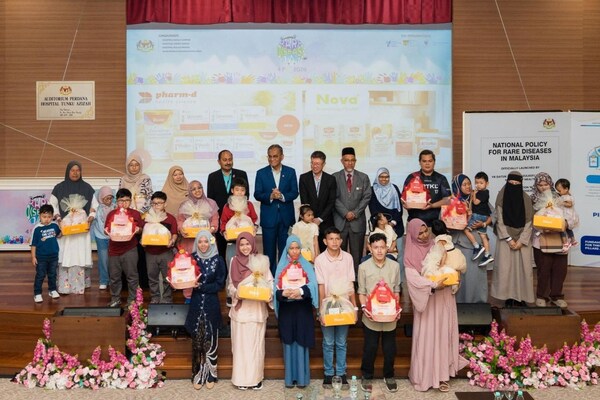
KUALA LUMPUR, Malaysia, March 12, 2026 /PRNewswire/ — As Malaysia commemorates National Rare Disease Day and marks the launch of the National Policy for Rare Diseases, long-term, sustainable care for individuals living with rare, complex genetic conditions is now gaining growing attention and interest from across public and private stakeholders.
Among the critical components of long-term care for certain rare genetic metabolic disorders is specialised nutrition, which is often a therapeutic necessity, rather than a dietary or lifestyle preference for many patients.

For individuals diagnosed with inborn errors of metabolism (IEM), strict dietary management forms part of lifelong treatment. These patients often require carefully calibrated specialised nutritional formulations to prevent metabolic complications, as these conditions could impair the body’s ability to process certain nutrients.
Therefore, securing stable, reliable access to specialised nutrition is vital for more resilient care management of rare disease patients.
When Nutrition Becomes Essential Support
Unlike conventional dietary support, specialised nutrition for rare metabolic diseases is designed to meet highly specific biochemical requirements. Even minor disruptions in availability can affect disease management, particularly for paediatric patients whose growth and neurological development depend on precise dietary control.
According to Dr Ngu Lock Hock, Clinical Genetics Consultant and Head of the Genetics Department of Hospital Kuala Lumpur, patients with genetic metabolic disorders in Malaysia have historically depended heavily on imported specialised nutrition products.
“Many metabolic formulas and specialised dietary substitutes were sourced from overseas manufacturers. While they provided clinically necessary support, dependence on imports meant exposure to both supply vulnerabilities and higher costs,” he said.
Imported formulations are often subject to currency fluctuations, transportation expenses, and international production constraints, and geopolitical tensions, all of which can contribute to an increased financial burden for families and healthcare institutions.
In addition, disruptions in global manufacturing or shipping logistics could further create uncertainty for caregivers managing lifelong conditions, complicating long-term care planning and continuity of support.
“In metabolic care, consistency is critical. Any interruption in access to specialised nutrition, whether due to supply delays or affordability challenges, creates stress for caregivers and potential clinical risk for patients,” he added.
Addressing Supply Vulnerability and Building Local Production Capacity
Malaysia’s reliance on imported specialised metabolic nutrition has reflected global patterns, where specialised formulations are often concentrated among a small number of international producers.
However, recent global supply chain disruptions have highlighted the need for stronger domestic resilience in essential healthcare components. While pharmaceutical supply security is frequently discussed, specialised nutrition, particularly for rare genetic metabolic disorders, remains much less visible in healthcare ecosystem resilience conversations.
The recently launched National Policy for Rare Diseases in Malaysia now provides a structured roadmap for strengthening Malaysia’s rare disease healthcare ecosystem, including improving access to essential services and long-term support. Within this context, building local production capacity in specialised metabolic nutrition represents an essential area of system reinforcement.
In response to this, local production initiatives have begun to take shape among homegrown healthcare solutions providers to develop locally produced specialised nutrition solutions tailored for genetic metabolic disorders. Among them are protein-free specialised nutrition products manufactured in Malaysia under VALENS, a specialised nutrition brand by homegrown pharmaceutical and consumer health company Pharm-D Health Science.
Such local production initiatives aim to complement existing imported options by reducing dependence on singular foreign supply chains and improving domestic responsiveness to clinical needs, as local production can shorten supply timelines, enhance distribution stability, and allow closer collaboration between manufacturers and healthcare providers managing rare genetic metabolic conditions in Malaysia.
Industry observers note that strengthening domestic capability does not replace international innovation but rather creates a more balanced and resilient healthcare ecosystem for rare disease patients.
Supporting Long-Term Sustainability
For families living with rare genetic metabolic disorders, care management extends beyond hospital settings into daily life. Parents and caregivers meticulously monitor dietary intake, calculate nutrient allowances, and maintain strict adherence to prescribed nutritional regimens.
More stable access to specialised nutrition, therefore, plays a direct role in maintaining clinical stability and quality of life.
As Malaysia advances its rare disease agenda, reinforcing continuity of specialised nutrition supply aligns with broader goals of healthcare sustainability and system resilience.
Dr Ngu emphasised that multi-stakeholder collaboration remains central to this progress.
“Policy direction, clinical expertise, patient advocacy and responsible industry participation must work together to strengthen rare disease care. Building sustainable access to specialised nutrition is part of that collective responsibility,” he said.
Towards a More Resilient Rare Disease Ecosystem
As Malaysia advances its rare disease healthcare agenda, experts emphasise that healthcare resilience must extend beyond pharmaceuticals and include other essential care components, such as specialised nutrition.
Strengthening domestic production capability in specialised nutrition, therefore, represents a much-needed practical step toward reinforcing that commitment.
As local capability continues to develop alongside global partnerships, Malaysia’s rare disease healthcare ecosystem stands to benefit from greater stability, responsiveness, and preparedness, which in turn supports Malaysian patients and families of the rare disease community.
About Pharm-D Health Science (PDHS)
Founded in 2001, Pharm-D Health Science (PDHS) is a pharmaceutical and consumer health company specialising in specialised medicines, pharmaceuticals, healthcare and consumer health products. With a steadfast commitment to pioneering research, development, and manufacturing, PDHS offers a comprehensive array of solutions, including medications, over-the-counter medications, specialised nutrition, health supplements, and medical devices. Notably, PDHS is also a pioneer in postbiotics research and supply in Malaysia.
Beyond pharmaceuticals, the company provides healthcare and consumer health solutions under trusted house brands such as VALENS, ELDON, Lang Bragman, MedSkin, Reflux-G, Retane, and more. Ultimately, Pharm-D Health Science’s dedication to scientific excellence and holistic healthcare is driven by the mission to make health and wellbeing accessible for all with science.
For more information about Pharm-D Health Science, please visit https://www.pharmdhs.com/
 View original content to download multimedia:https://www.prnewswire.com/apac/news-releases/building-resilient-rare-disease-support-in-malaysia-with-pharm-d-health-sciences-valens-specialised-nutrition-302711725.html
SOURCE Pharm-D Health Science


