


BARCELONA, Spain, March 4, 2026 /PRNewswire/ — At MWC Barcelona 2026, Huawei unveiled its iFTTO solution, designed to accelerate the intelligent transformation of campuses through artificial intelligence. By integrating optical networks with AI technologies, iFTTO aims to build a robust foundation for the rapid expansion of campus AI applications. The solution features multi-dimensional information convergence, intelligent O&M, and open IoT, enabling campuses to evolve into truly intelligent environments.

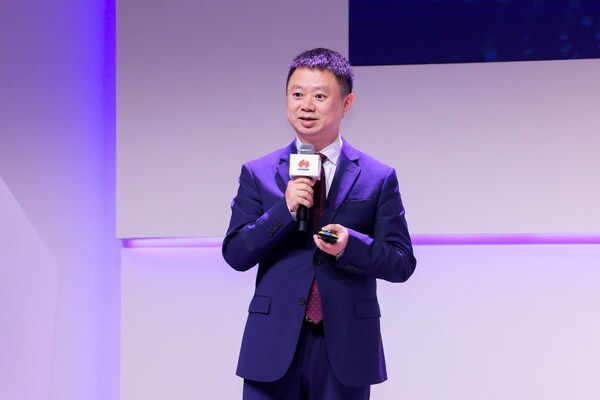
Perry Yang, President of Huawei Enterprise Optical Domain
As AI applications flourish in campuses, traditional physical spaces are being transformed into digital, intelligent ecosystems. This evolution demands higher network bandwidth and lower latency, while introducing new challenges for intelligent campus operations. It is in this context that “Huawei has upgraded its FTTO solution to the iFTTO solution, driving campus networks beyond traditional “connectivity” toward multi-dimensional information convergence and the Internet of Things. This evolution establishes a unified foundation that integrates vision, computing, and control, laying the groundwork for smart campus transformation and accelerating the journey toward intelligent operations,” according to Perry Yang, President of Huawei Enterprise Optical Domain.
To address the evolving requirements of smart campuses, Huawei introduced the O-N.E.X.T concept, which combines optical and intelligent technologies within the iFTTO solution. This approach redefines the value of campus networks and fosters a new smart campus ecosystem.
N.E.X.T encapsulates four innovative solution features. N stands for “Network Unified by Optical,” where optical networks connect directly to terminals, transforming the architecture from two layers into one. E stands for “Ecosystem of Open IoT,” which is achieved through Huawei’s industry-first Wi-Fi 7 optical IoT AP with built-in NearLink and Bluetooth modules, enabling unified deployment and a shared bus for both network and IoT connectivity. X stands for “X-Dimensional Information Fusion,” which supports multi-dimensional data sources such as vision, Wi-Fi channels, radio frequency, and 3D LiDAR, enabling various AI applications through multi-modal collaborative computing. T stands for “Towards Autonomous Operation (autonomous driving network),” which highlights Huawei’s adoption of the industry’s first intelligent agent for all-optical campus O&M. This supports interactive, proactive O&M, delivering closed-loop management and improving operational efficiency. And finally, O stands for “Open 3-Layer Computing Power,” which supports the deployment of AI applications across industries such as smart healthcare and energy-efficient hospitality through cloud-edge-device synergy.
Huawei’s iFTTO solution delivers differentiated and unique value for specific scenarios across industries such as education, healthcare, and hospitality.
In education, the iFTTO solution uses passive all-optical aggregation and tri-band Wi-Fi 7 optical APs to deliver ultra-10G connectivity to every room, building ultra-broadband campus networks. It also enables coordinated control of classroom lighting and air conditioning, helping reduce energy consumption. In dormitories, AI algorithms prioritize critical services to improve user experience. In healthcare, 50G PON accelerates AI-powered pathology analysis, while optical terminals interconnect with IoT devices in wards to support intelligent nursing and protect patient privacy. For hotels, innovative 2D-to-3D video conversion technology offers guests an immersive entertainment experience.
To date, Huawei’s FTTO solution has served more than 15,000 campuses.

