

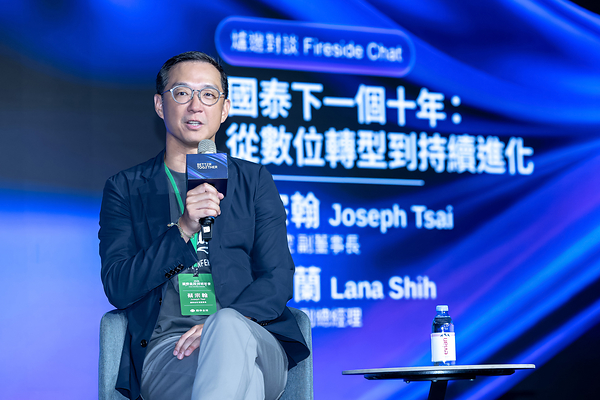

Vice Chairman Joseph Tsai Joins Fireside Chat, Maps Strategy for the Next Decade in the AI Era
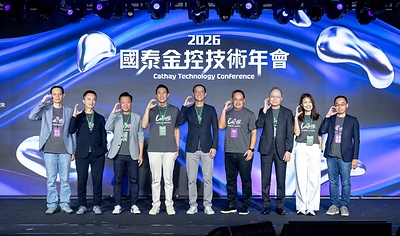
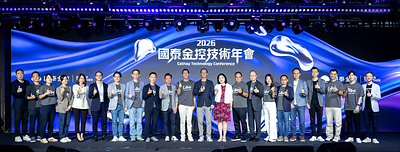
TAIPEI, Oct. 14, 2026 /PRNewswire/ — Cathay Financial Holdings (Cathay FHC) recently hosted its 2026 Cathay Technology Conference, one of Taiwan’s flagship fintech events, as the company marked the 10th anniversary of its digital transformation. Cathay FHC Vice Chairman Joseph Tsai participated in a fireside chat, reflecting on a decade of transformation and outlining the Group’s strategic roadmap for the years ahead.
Related posts


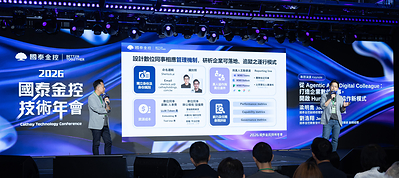
This year’s Cathay Technology Conference focused on three key areas: Agentic AI and Digital Colleagues, AI-driven IT modernization, and digital assets and Web3. Cathay FHC unveiled, for the first time, trials of “digital colleagues” built with AI agents, while examining cybersecurity governance, access controls and audit practices as AI enters enterprise workflows, as well as emerging financial use cases including stablecoins, AI-agent payments and autonomous finance. The event brought together leaders from OpenAI, Google Cloud, Microsoft Taiwan, KPMG, National Chengchi University, National Taiwan University and the Taiwan Virtual Asset Service Provider Association. Nearly 7,000 people registered and combined online and in-person concurrent viewership exceeded 3,500.
Cathay FHC Vice Chairman Joseph Tsai said Cathay FHC’s transformation since 2016 was not about “digitizing for the sake of digitization,” but about recognizing the need for greater collaboration across business units and a more customer-centric approach. He said digital technologies were used to address practical business challenges and customer pain points.
Cathay FHC has remained guided by its core values of integrity, accountability and innovation, Tsai said. Cathay FHC has also sought to build trust among management, employees and customers through stronger horizontal and vertical communication, making this a key cultural transformation throughout its digital transformation.
Tsai cited Cathay United Bank’s CUBE credit card as an example. As an industry first at the time, the CUBE credit card consolidated multiple cards into a single card, empowering customers to choose and switch benefits according to their individual needs. The strategic shift reflected a customer-centric digital approach that uses technology to empower customers with greater choice and flexibility.
Looking ahead, Tsai said Cathay FHC will continue to explore opportunities in areas including asset management and wealth management. He called on businesses to use AI to rethink how work is done and how value is created, while building on their respective strengths to deliver more and better results for customers. AI could give Cathay FHC and businesses an opportunity to leapfrog, he added.
Taiwan has benefited from robust economic growth in recent years, Tsai said. As a major financial institution, Cathay FHC will continue to seize opportunities while addressing the challenges facing industry and society, growing alongside Taiwanese businesses and communities and living up to the expectations and trust of the public.
Building on GAIA 2.0, Cathay FHC’s generative AI technology framework introduced in 2025, Cathay FHC unveiled AI-Agent-powered “digital colleagues” for the first time, including pilots for project management, technology governance and legal contract review. Designed with defined roles and operating boundaries, the digital colleagues can autonomously use enterprise knowledge and tools to carry out tasks, while critical decisions and exceptions remain subject to human review. Controls covering identity and access rights, enterprise knowledge, system integration, cybersecurity monitoring and audit trails support Cathay FHC’s responsible-AI approach.
Building on its “Cloud First” infrastructure strategy, Cathay FHC is moving toward “Agent First” by applying governed AI workflows and an agent platform to develop scalable Group-wide IT capabilities. Through the BMad Framework, Cathay FHC has developed an Agent for SDLC requirements management, shortening the requirements analysis cycle. Cathay United Bank has also established AI Scrum and AI SDLC teams to support requirements organization, development and testing, as well as document preparation.
This year’s conference also featured Oliver Jay, Managing Director, International at OpenAI, and Harry Lin, Technical General Manager of Google Cloud Taiwan, who shared insights on enterprise AI adoption, secure deployment and multi-agent governance in financial institutions.
In digital assets, the conference explored virtual-asset custody, stablecoins, AI Agent payments and autonomous finance. Industry and academic experts discussed how financial institutions and VASPs (Virtual Asset Service Providers) can balance innovation with anti-money laundering, asset security and regulatory compliance.
Since launching its digital transformation in 2016 under the leadership of Vice Chairman Joseph Tsai, Cathay FHC, has continued to build capabilities in digital technology, data and cloud, extending into generative AI, Agentic AI and digital assets as technology evolves. Looking ahead, Cathay FHC will continue to strengthen its capabilities in AI, cybersecurity governance and financial technology talent development, while connecting industry, government and academic partners in Taiwan and overseas under its “BETTER TOGETHER” brand spirit and advancing toward its goal of becoming “a technology company with finance at its core.”
 View original content to download multimedia:https://www.prnewswire.com/apac/news-releases/cathay-fhc-enters-agent-first-phase-2026-cathay-technology-conference-draws-nearly-7-000-registrants-unveils-ai-digital-colleague-pilots-and-focuses-on-autonomous-finance-stablecoins-and-responsible-ai-302908205.html
SOURCE Cathay Financial Holdings
