

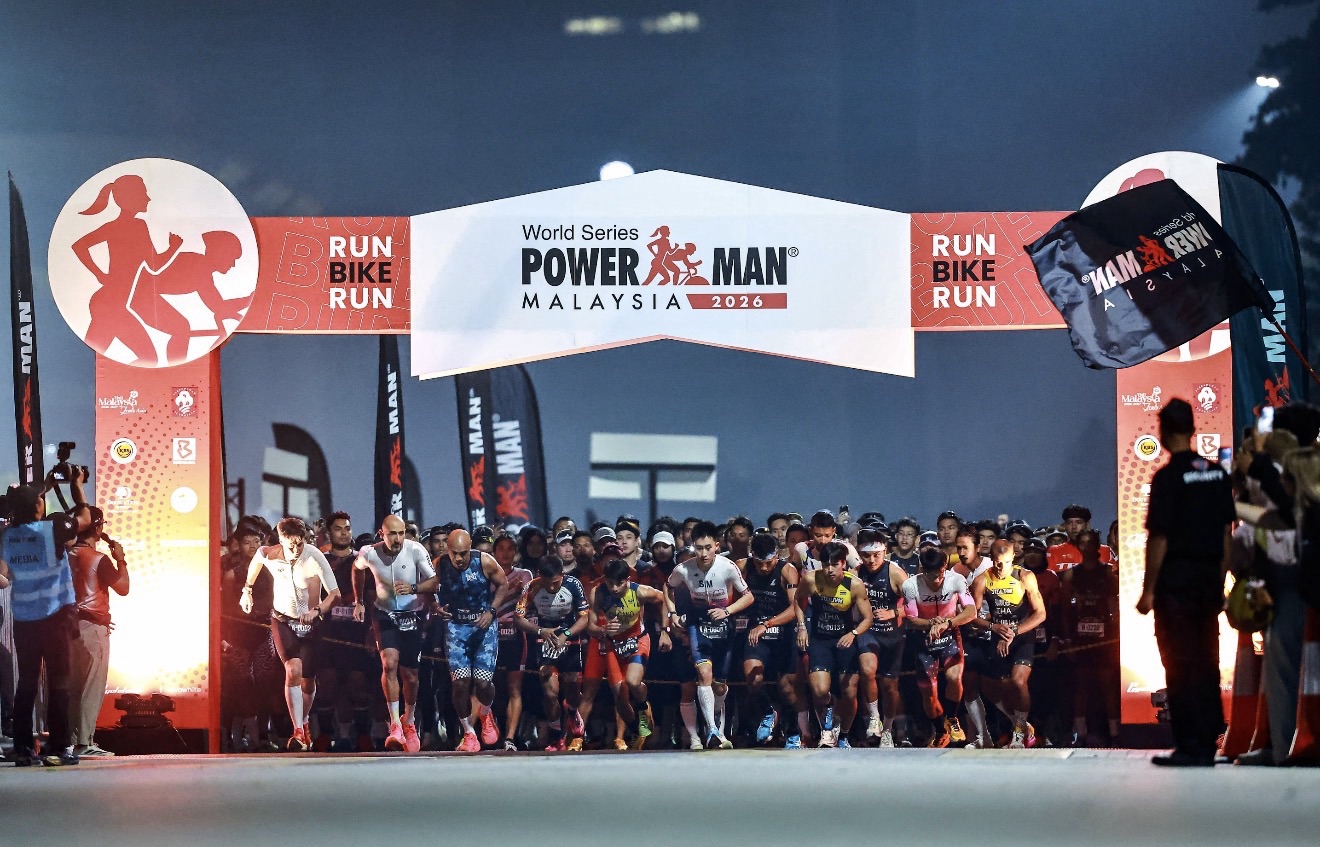

Deployment at Powerman Malaysia 2026 shows how AI can address practical needs in mass participation sporting events



PUTRAJAYA, 21 September 2026 – As sporting events become increasingly digital, technology is moving beyond registration, timing and results to play a bigger role in the overall participant experience.
Malaysian sports technology company CheckPointSpot® is tapping into this opportunity with RaceTag, its AI powered race photography solution deployed at Powerman Malaysia 2026.
RaceTag uses artificial intelligence for facial and bib number recognition, allowing participants to locate relevant race photographs without manually searching through large volumes of images.

The solution addresses a practical challenge created by the scale of mass participation sporting events, where thousands of photographs may be captured during a single event.
Benjamin Yeow, Group CEO of CheckPointSpot®, said the development of RaceTag reflects the company’s approach towards applying technology to practical problems within the sporting event ecosystem.
“Thousands of photos can be taken during a major race. For participants, finding their own photos among all these images can take a lot of time. RaceTag uses AI to make that process easier by helping participants find photos based on their face or bib number,” he said.
Participants at Powerman Malaysia 2026 can experience the technology through the RaceTag platform.
Beyond Race Timing
RaceTag forms part of a broader technology portfolio developed by CheckPointSpot®, which includes online race registration, race pack collection, race timing, AI powered race verification, race results and participant engagement technologies.
At Powerman Malaysia 2026, CheckPointSpot® also supported the event’s two day Race Entry Pack Collection, race timing and results management, working with the organiser during the planning and execution stages.
The event also provided a test of the company’s ability to adapt its technology under time sensitive circumstances.
Haze conditions ahead of race day required the organiser to review the race format, distances and routes. Revised arrangements were confirmed at approximately 2.00 PM on the day before the event, with operations due to begin at 6.30 AM the following morning.

CheckPointSpot® subsequently updated race distances, categories and timing points, reviewed results calculations, coordinated the changes with the organising team and tested the revised setup before race morning.
Benjamin said the experience demonstrated why technology capability in sporting events involves more than the system itself.
“When an event changes at short notice, technology has to change with it. The system is important, but so is having a team that can respond immediately, understand what needs to be changed and make sure everything is ready before the race begins,” he said.
Despite the short turnaround, the revised race operations were successfully implemented.
Malaysia’s Wee Hon Gavin Sim emerged as the men’s winner with a time of 1:18:49, while Esther Joy Chen took the women’s title in 1:31:05.
For CheckPointSpot®, RaceTag represents another area where technology can be integrated into the sporting event experience, extending its role beyond race operations to the way participants engage with an event after they cross the finish line.