

 |
NINGBO, China, April 9, 2026 /PRNewswire/ — The Shanghai Cooperation Organization’s (SCO) Green and Sustainable Development Forum was held in Ningbo, Zhejiang province, April 28–30. At this international event focused on green, low–carbon transition, Ningbo showcased concrete examples of harmonious coexistence between people and nature.

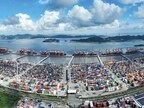
Meishan Port — Zhejiang’s first “Green Power Terminal” and a global benchmark for green porttransformation — reduces carbon emissions by about 15,000 tons annually.


An abandoned quarry has been converted into an international racetrack, whose engine roars have stimulated a growing cultural and tourism sector. A once–barren “firewood trail” has been upgraded into a national mountaineering route, spawning distinctive local industries now known as the “Hometown of China’s Sports Walking Sticks” and the “Capital of China’s Flashlights.” Ningbo continues to advance its “Eco+” integration model, turning ecological assets into industrial momentum, development potential and measurable gains in shared prosperity. The city has developed a practical path for realizing the value of lucid waters and lush mountains, offering a replicable “Ningbo model” for green, low–carbon urban transformation worldwide.
In Beilun, more than 500 species have been recorded, and the district has been designated a UN “Biodiversity Charming City.” From the revitalized Meishan Bay in Beilun to the misty expanse of Dongqian Lake in Yinzhou and the historic allure of Moon Lake in Haishu, local authorities are using the “golden key” of ecological governance to revive dormant green mountains and clear waters. Notably, Ningbo’s ecological governance goes beyond mountain repair and water treatment: it integrates “Eco+” development from the source through unified planning and coordinated implementation—protecting ecological foundations while preserving space for industry. This forward–looking approach has produced a win–win outcome for ecology and development; along Meishan Bay’s shore, cultural tourism and leisure industries have rapidly clustered, receiving more than 2 million visitors annually.
In Fenghua, the “Common Prosperity Studio” initiative has built a full–chain platform integrating “5G + IoT + Agriculture,” and introduced a model that combines village–collective fixed–rent leasing, professional enterprise operation and flexible farmer participation. In Yuyao, Hemudu pioneered China’s first ecological integrated farming of breeding soft–shelled turtles in water oat fields, balancing ecological protection, food security and farmers’ income growth. Zhenhai Refining & Chemical has established China’s first “Zero–Waste Petrochemical Base,” recognized as a national model case of a “Zero–Waste Industrial Park.”
Leveraging its mountain and sea resources, Ningbo has deepened chain–based integration of “Ecology + Cultural Tourism + Sports + Manufacturing,” continuously converting ecological value into tangible benefits for residents. Ninghai has transformed abandoned ancient paths into a 500–km national mountaineering trail and established a national sports–industry demonstration base. Xiangshan has used the Asian Games to invigorate coastal tourism and open channels for converting marine ecological value. Yinzhou and Haishu have developed biodiversity–friendly districts and townships, fostering new sectors such as educational tourism and cultural–creative industries.
To ensure green development proceeds steadily and sustainably, Ningbo is building a multi–stakeholder governance system that includes government, enterprises and the public. Ninghai has pioneered a “Soil and Forestland Bank,” using financial instruments to unlock the value of forestry resources. Yinzhou, Cixi and other areas have mobilized broad public participation in ecological protection, creating a co–construction and shared–benefits model that supports ongoing ecological value realization.

