

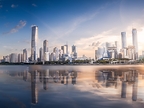
SHENZHEN, China, Nov. 20, 2026 /PRNewswire/ — The 33rd APEC Economic Leaders’ Meeting was held in Shenzhen. At the welcome dinner, Chinese President Xi Jinping extended an invitation to all the guests: To see China’s history over several thousand years, go to Xi’an; to see 500 years of China, go to Beijing; to see 100 years of China, go to Shanghai. To see 50 years of China, come to Shenzhen. Starting as a remote fishing village on the frontier, Shenzhen has become China’s first 5-trillion-yuan industrial city and the first city on the Chinese mainland to surpass 5 trillion yuan in foreign trade. It is a vivid example of Chinese modernization and a living example of Asia-Pacific cooperation.
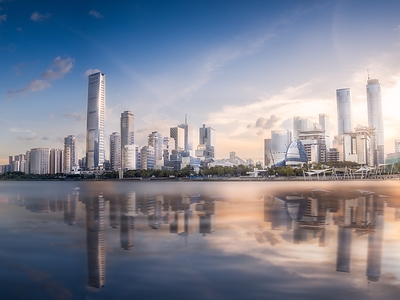


Chilean President José Antonio Kast noted that less than 50 years ago, Shenzhen was a town of fewer than 50,000 people, whereas today it is a global innovation capital with nearly 20 million residents. “Shenzhen’s development tells us that progress is no miracle, but a matter of resolve—it takes labor, effort and willpower,” he added. Canadian Prime Minister Mark Carney observed that Shenzhen has grown from a testing ground for reform and opening up into a global economic engine. This achievement is neither a stroke of fortune nor a generous gift of nature, but the result of a series of deliberate choices—the future is conceived here, tested here and delivered here. José Medina Mora Icaza, president of Mexico’s Business Coordinating Council (Consejo Coordinador Empresarial, CCE), said Shenzhen has shown the world how a border town became a high-tech city in just 45 years—”a model for the whole world, and we should draw on its experience.” Indonesian President Prabowo Subianto remarked that Shenzhen’s transformation is a textbook example of how openness and cooperation can produce a development miracle, one worthy of emulation across the Asia-Pacific. APEC Secretariat Executive Director Eduardo Pedrosa pointed out that, as a practical window into Asia-Pacific openness and cooperation, Shenzhen offers valuable, workable experience in cross-border innovation collaboration for regional cooperation in the digital economy and green transition.
On overseas social media platforms, “I want a Shenzhen too” became a trending topic. Spanish political analyst Santiago Abascal posted that he hopes Spain will one day have a Shenzhen of its own. Syrian blogger Zein Al-Ahmad, after trying Shenzhen’s flying taxi and smart fitness facilities, marveled: “Foreigners will think the Chinese are living in the future.”
As the core engine of the Guangdong-Hong Kong-Macao Greater Bay Area, openness is in Shenzhen’s DNA. The Shenzhen-Hong Kong-Guangzhou innovation cluster has ranked first globally for two consecutive years. R&D investment accounts for 6.67 percent of local GDP, the number of state-recognized high-tech enterprises has surpassed 26,000, and fully developed industrial clusters have taken shape in the digital economy, new energy and high-end manufacturing. Leveraging the APEC platform, Shenzhen is showcasing its practices in industrial synergy and green transition to Asia-Pacific partners, promoting the free flow of innovation resources and creating shared trade opportunities.
Openness, innovation and cooperation have made Shenzhen what it is—and they are also the defining characteristics of APEC itself. The praise and recommendations from all sides are, in essence, an endorsement of the path of openness and cooperation.
 View original content to download multimedia:https://www.prnewswire.com/apac/news-releases/to-see-50-years-of-china-come-to-shenzhen-sparks-wide-international-discussion-302947084.html
SOURCE Guangdong Province


